Use this guide to prepare your tasting experience: format, booking and questions for the winemaker. Compare places and visitor arrangements in our estate selection, then connect them with our suggested routes.
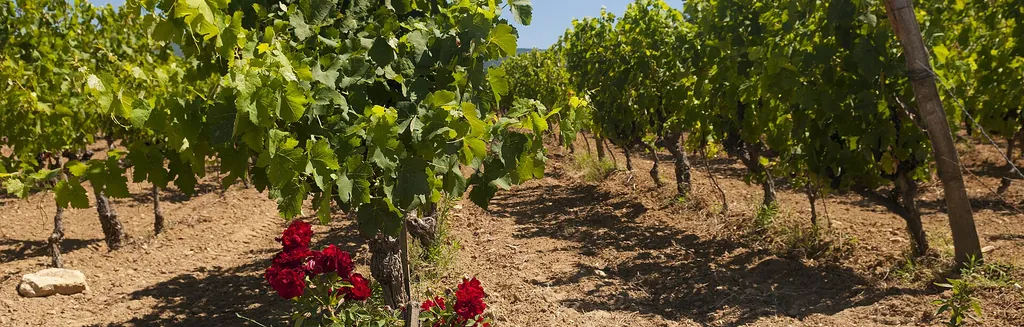
There is one hour, in the Luberon, when everything slows down. It is the hour when the light shifts from white to gold, when the rows of vines cast long shadows over the ochre soil, and when you push open the door of a cellar to taste what the land has given this year. From Le Clos de Manon, a ten-minute walk from Gordes, we have turned wine touring into a ritual we love to share with our guests: half a day, two or three estates, a tasting notebook, and the pleasure of understanding a landscape by drinking it.
Because the Luberon is far more than a postcard of hilltop villages. It is also a living vineyard, shared between two great appellations, AOC Luberon and AOC Ventoux, and worked by winemakers who, in a single generation, have lifted the region to the rank of the terroirs that matter. Here is our practical guide to visiting the estates, tasting with discernment and bringing home, come evening, far more than a bottle.
The Luberon, a land of vines
We sometimes forget it, captivated as we are by the markets and the villages, but the Luberon is first and foremost a country of vines. Vine-growing here has been documented since antiquity, and the Romans had already understood it: the triangle of hills between Gordes, Bonnieux and Lourmarin enjoys a rare combination of sunshine, altitude and cool nights. It is precisely this swing in temperature — up to 15 °C between day and night in summer — that gives the area's wines their freshness and elegance.
Most of the vineyard lies within the Luberon Regional Nature Park, which is no small thing: protecting the landscape and the environmental pressure that comes with it pushed many estates towards organic and biodynamic farming long before it was fashionable. Today, more than a third of the Luberon appellation's vineyards are farmed organically — one of the highest rates in the entire Rhône Valley.
For the traveller, this translates into a particularly enjoyable experience: estates on a human scale, often family-run, tucked into stone farmhouses where you are welcomed with no fuss. We are a world away from the Bordeaux châteaux and their gilded gates. Here, the winemaker happily talks about the soils, has you smell the garrigue in your glass, and lets you leave feeling you have been let in on a secret. It is this art of living that we also explore in our food lover's guide to Luberon cuisine.
A few figures help to grasp the scale of this discreet vineyard. The Luberon appellation covers around 3,200 hectares spread across some thirty villages, and produces more than 100,000 hectolitres a year, the majority of it rosé and red. The Ventoux, larger still with nearly 5,700 hectares, stretches across some fifty villages at the foot of the mountain. For the traveller, this means one simple thing: wherever you stay around Gordes, a quality cellar is always less than twenty minutes away.
The appellations: AOC Luberon and Ventoux
Two great protected designations of origin share the territory, and it is worth knowing how to tell them apart before you set off tasting. Both belong to the southern Rhône Valley, but each has its own personality.
AOC Luberon, recognised in 1988, stretches across the southern slope of the range, from Cavaillon to Pertuis. It produces all three colours, with a growing reputation for fresh, floral rosés and whites. The reds, based on grenache and syrah, are supple and fruity, made for the table rather than for the cellar. To go further, we set out the grape varieties and styles in our dedicated article on AOC Luberon and Ventoux wines.
AOC Ventoux, for its part, occupies the foothills of the giant of Provence, to the north. Higher in altitude and more continental, it produces wines that are both sun-drenched and taut, with some very fine syrahs. Long underrated, it is an appellation that today offers some of the best value in the region. The two official bodies, the Luberon wine syndicate and the AOC Ventoux wine syndicate, publish estate maps and event calendars that are invaluable for planning a visit.
| Appellation | Recognised | Colours | Dominant style | Cellar price guide |
|---|---|---|---|---|
| AOC Luberon | 1988 | Red, rosé, white | Fresh, fruity, elegant | €8 to €18 |
| AOC Ventoux | 1973 | Red, rosé, white | Sun-drenched, taut, generous | €7 to €16 |
| Châteauneuf-du-Pape | 1936 | Red, white | Powerful, for ageing | €25 to €60 |
Understanding the grape varieties and the rosés
To taste with pleasure, there is no need to be an oenologist: you simply need to know a few key southern grape varieties. Grenache brings roundness, warmth and aromas of ripe red fruit; syrah gives colour, pepper and structure; mourvèdre, rarer here, adds depth. For the whites and rosés, you will find clairette, vermentino (rolle), white grenache and roussanne, which make floral, mineral wines.
Rosé deserves a special mention here, for it is the ambassador of the Provençal summer. Far from the cliché of the pointless poolside wine, the rosés of the Luberon are wines for the table — pale, dry, taut, made to accompany a whole meal. They are served cool, between 8 and 10 °C, neither iced (which deadens the aromas) nor lukewarm. To enjoy them, here is our little house protocol:
- The eye: look at the colour — a pale rosé with peach or salmon glints is generally a sign of freshness;
- The nose: look for citrus, white peach, sometimes a note of garrigue or almond;
- The palate: a good rosé is dry and lively, with a snappy finish that makes you want another sip;
- The temperature: if the wine is too cold, warm the glass in your hand for a minute and the aromas will open up.
This framework works for all three colours. The key is to take your time and compare: it is by tasting two reds side by side that you grasp what syrah changes, or why a high-altitude terroir brings more freshness.
How a tasting unfolds
Pushing open the door of a cellar for the first time can be daunting. Rest assured: in the Luberon, the welcome is warm and free of snobbery. Here is how things generally go, so you can arrive at ease.
You are received at the cellar, the estate's tasting and sales room, usually open from 10am to 12.30pm and then from 2pm to 6pm or 7pm in season. The winemaker or a cellar hand offers you a selection to taste, from the lightest to the most powerful: you begin with the whites and rosés, move on to the reds, and may finish with an ageing wine or a sweet one. A simple tasting lasts twenty to thirty minutes; allow a good hour for a cellar tour with explanations.
- Spitting is normal and professional: spittoons are provided, no one will judge you, and it is the surest way to keep a clean palate and stay fit to drive;
- Ask questions: winemakers love to talk about their work — ask about the age of the vines, the type of soil, the ageing;
- There is no obligation to buy, but picking up a bottle or two is an appreciated gesture if you have enjoyed the welcome;
- Limit yourself to two or three estates a day: beyond that, the palate tires and the pleasure fades.
To build a coherent itinerary rather than improvising, we often point our guests towards our guide to the Luberon wine route, which suggests one-day loops by area.
Our favourite estates to visit
Over the seasons, we have built up a soft spot for a handful of estates that we recommend to our guests without hesitation. All are reachable from Gordes in under forty minutes, and each tells a different side of the terroir. You will find a wider selection in our overview of wineries to visit.
- Château la Canorgue (Bonnieux), about 30 min away: an iconic organic estate, the setting for the film A Good Year with Russell Crowe, with magnificent reds and a superb backdrop;
- Domaine de la Citadelle (Ménerbes), 25 min away: a large hilltop estate, with a quirky corkscrew museum and a lovely organic range;
- La Bastide du Claux (Maubec), 25 min away: a passionate small grower, with finely chiselled whites and remarkable high-altitude reds;
- Château Val Joanis (Pertuis), 40 min away: with award-winning gardens and a very professional welcome;
- Cave de Bonnieux, 30 min away: to understand cooperative winemaking and taste a wide range at gentle prices.
Our insider tip: call the day before for the family estates, as opening hours vary out of season, and favour the morning, when the palate is freshest and the cellars quietest. In July and August, several estates host winemakers' evenings with food trucks and music under the plane trees, a sociable way to taste.
Provençal food-and-wine pairings
A wine truly reveals itself at the table. The wines of the Luberon, fresh and easy-drinking, are perfect companions to southern cooking, built on olive oil, herbs and sun-ripened vegetables. Here are our favourite pairings, easy to recreate with produce from the Gordes or Apt market.
| Wine | Provençal dish | Why it works |
|---|---|---|
| Luberon rosé | Tapenade, anchoïade, salade niçoise | The vivacity cuts through the fat and the umami |
| White (vermentino) | Grilled sea bass, brandade, fresh goat's cheese | The minerality supports the fish |
| Light Luberon red | Ratatouille, herbed lamb, stuffed tomatoes | The fruit converses with the slow-cooked vegetables |
| Structured Ventoux red | Provençal daube, game, aged cheeses | The structure holds up to braised dishes |
In winter, do not forget the region's signature pairing: a generous Ventoux red with a plate of Luberon black truffle, whose season runs from mid-November to mid-March. To learn how to cook these products and their pairings, some of our guests extend the experience with a full food lover's journey through markets, estates and local tables.
Responsible wine touring and moderation
Tasting is not drinking. Our whole approach to wine touring rests on this principle: you taste to understand, you savour with measure, and you never get behind the wheel after several glasses. It is a matter of safety, but also of pleasure, because a sober palate tastes better.
- Spit systematically during multiple tastings, just as all the professionals do;
- Appoint a sober driver in the group, or take turns from one estate to the next;
- Opt for a tour with a driver: several operators run minibus days from Gordes, from €90 to €150 per person;
- Stay hydrated and eat: pack a bottle of water and a snack for between estates;
- Buy and have it delivered: many estates ship cases, so there is no need to load up the car.
Alcohol abuse is dangerous for your health, please drink in moderation. This restraint is part of the refinement: the real luxury in Provence is the time you take, not the number of glasses you line up.
Combining with Châteauneuf-du-Pape
If your stay leaves you an extra day and you love great reds, head up to Châteauneuf-du-Pape, about an hour's drive northwest of Gordes. You enter a different world: here, the famous rolled pebbles cover the ground, grenache reaches peaks of power, and the wines are made for ageing, at prices noticeably higher than in the Luberon.
It is a fascinating contrast to experience within a single trip: the playful freshness of the Luberon in the morning, the solemn power of Châteauneuf in the afternoon. It pairs easily with a visit to the Roman town of Orange and its ancient theatre. We detail this escape in our article on Châteauneuf-du-Pape and Orange, which offers a ready-made itinerary.
Wine touring from Le Clos de Manon
The whole appeal of staying a ten-minute walk from Gordes is this central position that puts both appellations within easy reach by road: a quarter of an hour to the first estates, an hour to Châteauneuf, and in between, dozens of cellars to explore. In the evening, you come home to the quiet, open a bottle you have brought back on the terrace, and taste it facing the sunset, without having got back behind the wheel.
We love to put together a little notebook of estates for our guests according to their tastes, to book the guided tours and to advise on the best loops depending on the season and the day's weather. In spring, the vines are budding and the cellars are calm; in September, you sometimes catch the harvest and the atmosphere turns electric. Each period has its charm, and we are always happy to adapt our suggestions to the timing of your visit.
For a real immersion in the wines of the Luberon, allow a stay of five to seven nights: enough to alternate tastings, markets, swims in the heated pool and quiet evenings. If the mood takes you, you can check our availability at Le Clos de Manon right now and start imagining your next tastings under the Provençal sun.