This guide explains appellations, grape varieties and food pairings. To turn that knowledge into a visit, choose from three documented wine estates, then plan your route.
When our guests settle onto the terrace on their first evening and uncork a bottle picked up that afternoon from a nearby winegrower, the same question often comes up: "so what, exactly, is a Luberon wine?" And how does it differ from its neighbour the Ventoux, which turns up on the same wine lists in Gordes? These two appellations share a climate, a quality of light and a certain idea of conviviality, yet they have neither the same temperament, nor the same soils, nor quite the same grape varieties. Here is our little host's guide to finding your way: the grape varieties, the styles, the pairings worth trying, and where to go and taste it all just a stone's throw from the villa.
Two neighbouring appellations, two personalities
The Luberon and the Ventoux face each other on either side of the Apt plain, just a few kilometres apart. And yet, from the very first glass, you sense that you have shifted register.
The AOC Luberon: finesse and freshness
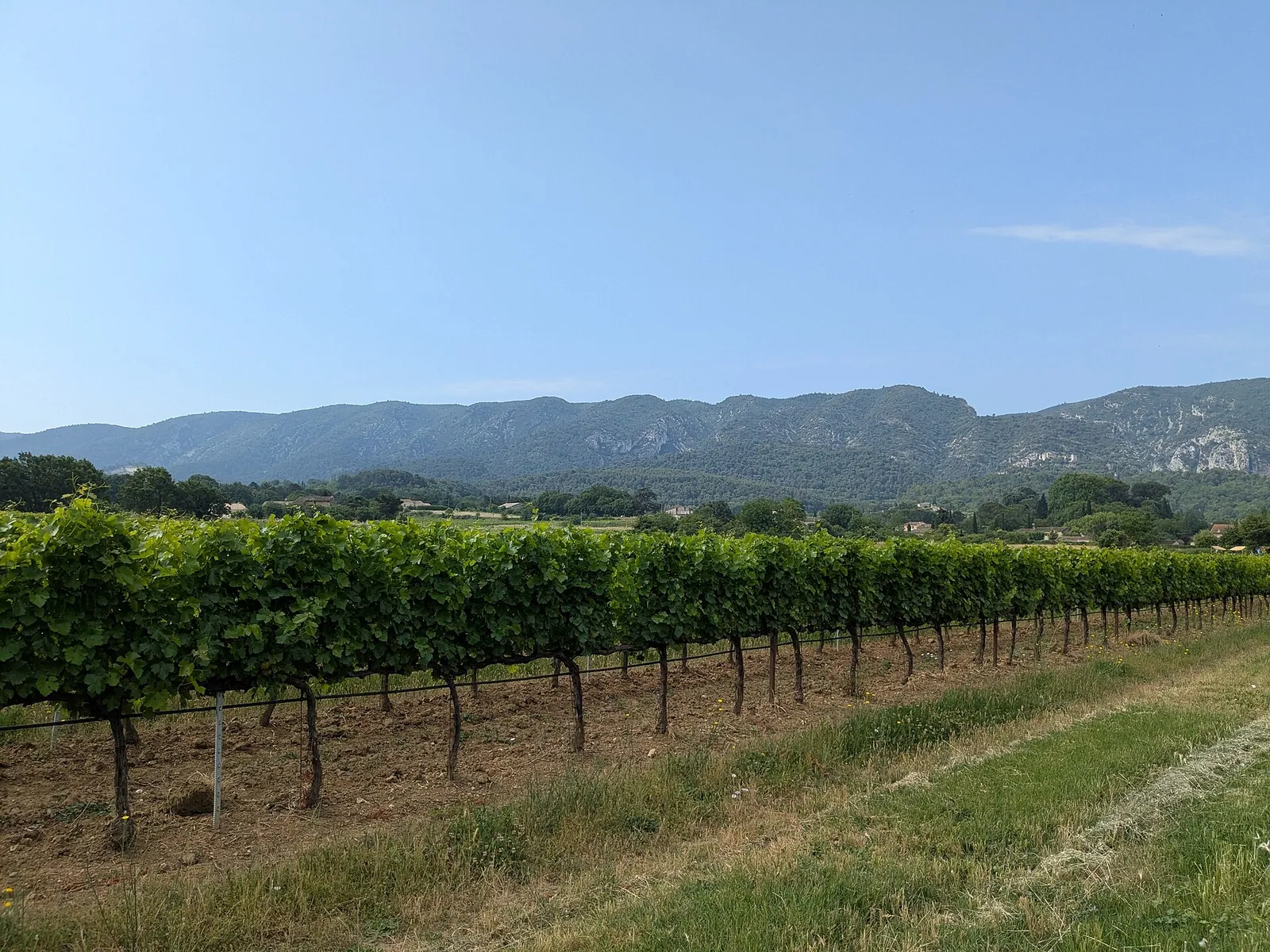
Granted appellation d'origine contrôlée status in 1988, the AOC Luberon covers the northern slope of the massif, around Apt, Bonnieux, Lourmarin and Cucuron. Its vines are often planted at altitude, between 200 and 450 metres, on clay-limestone soils. The result: fresh, refined wines, marked by a lovely acidity that makes them easy to drink and elegant. This is a terroir where the whites and rosés shine particularly bright, though the reds, increasingly well crafted, have nothing to be ashamed of by comparison.
The AOC Ventoux: generosity and character
The AOC Ventoux, also recognised in 1973 and then confirmed under this name in 2008, stretches across the foothills of the Giant of Provence, sometimes above 500 metres. The nights here are cooler than on the plain, which preserves the aromatic vibrancy of the grapes and produces fleshier reds, with notes of garrigue, black fruit and pepper. The whites are lively and taut, the rosés generous. This is a sunnier, more generous vineyard, one that lends itself happily to hearty regional dishes.
The grapes behind these wines
Both appellations belong to the great family of southern Rhône Valley wines and share a palette of Mediterranean grape varieties, blended with a deft hand.
- Grenache noir: the backbone of the reds and rosés, bringing fruit, roundness and warmth.
- Syrah: it gives colour, peppery notes and a tannic structure that allows wines to age, especially the Ventoux reds.
- Mourvèdre and carignan: used as complements, they add depth and character to the blends.
- Clairette, grenache blanc, roussanne and vermentino (also known as rolle): the pillars of the whites, floral, lively and sometimes faintly aniseed.
It is precisely this diversity of blends that explains why no two bottles are ever quite alike, and what makes tasting from one estate to the next so enjoyable. Wine, in fact, holds pride of place in our gourmet guide to the Luberon, alongside the region's other treasures.
Three styles, three moments of the day
Rather than going grape by grape, we like to introduce these wines to our guests according to the moment when they are best enjoyed.
The rosés, for the apéritif and summer lunches
Pale, delicate, made for the terrace: the rosés of the Luberon and the Ventoux are the liquid embodiment of a Provençal summer. Served well chilled (around 8 to 10 °C), they go with a salade niçoise, a tapenade, grilled vegetables, or simply the late-afternoon light. These are the ones our guests are happiest to empty by the pool.
The whites, for the table
Often underrated, the whites of these appellations are well worth seeking out. Lively and floral, they work wonders with Mediterranean fish, a fresh local goat's cheese, or a fougasse drizzled with olive oil. They strike up a beautiful dialogue with local produce, as we explain in our exploration of Provence olive oil and its mills.
The reds, for evenings and for keeping
The reds, finally, range from the easygoing and fruity, to be drunk young, all the way to age-worthy cuvées, more structured, that wait a few years in the cellar. The Ventoux reds in particular are a wonderful match for a Provençal daube, a leg of herb-roasted lamb or a truffle dish in season. On that note, the pairing of a generous red and a Vaucluse black truffle is one of the gastronomic high points of winter in the region, as we recount in our piece on the specialities of Provence: truffle, candied fruit and melon.
A few food and wine pairings to try
To get you started, here are the matches we most often suggest to our guests, simple and foolproof.
- Luberon rosé + tapenade and market vegetables: the quintessential Provençal apéritif.
- Ventoux white + fresh goat's cheese or grilled fish: freshness calls for freshness.
- Young Luberon red + grilled meats and ratatouille: for sunny lunches.
- Age-worthy Ventoux red + daube or herb-roasted lamb: the depth of the wine matches that of the dish.
- Structured red + truffle dish: the exceptional pairing of the winter season.
Where to taste around Gordes?
The good news is that the estates are all around us. In about twenty minutes you reach the Luberon hillsides, towards Bonnieux, Lacoste and Ménerbes; in forty-five minutes you climb up to the lands of the Ventoux, near Mormoiron, Bédoin or Caromb. Many winegrowers open their cellars for a tasting, often free of charge and always welcoming. We recommend calling the day before for the smaller estates, which are happy to receive visitors by appointment, and limiting yourself to two or three visits a day so you can really take the time to chat. To point you towards the best addresses, we have gathered our favourites in our selection of wine estates to visit around Gordes, where you will find everything you need to map out your own route as the mood takes you.
Tasting the Luberon from Le Clos de Manon
A ten-minute walk from Gordes, our villa with its private heated pool is the ideal base camp for exploring these two sister appellations. Many of our guests love to set off in the morning with an empty cool box and come home in the evening with the boot loaded with a few bottles, then compare a Luberon rosé and a Ventoux red on the terrace, facing the sunset. To live this gourmet interlude in the heart of Provence, simply check our availability and choose your dates: the winegrowers, for their part, are waiting for you right on your doorstep.