If there's one thing we love sharing with our guests, it's this simple truth: in the Luberon, you eat well everywhere, from the tiniest village café to the two-Michelin-starred table. Provençal terroir isn't a marketing line; it's something you taste every single day. From Gordes, where we welcome our guests, most of the great addresses and producers are less than a thirty-minute drive away. Here is our food lover's guide, the one we slip to our guests before they've even unpacked their bags.
A land cultivated for centuries
The Luberon is, first and foremost, a happy geography: a Mediterranean climate, clay-limestone soils, hills sheltered from the mistral and a generous sun. From this union are born some of the most iconic produce in Provence. Olive oil, wine, black truffle, the candied fruits of Apt, the Cavaillon melon and lavender honey make up a palette of flavours that the region's chefs elevate, but that you can just as easily bring back to your own kitchen.
The strength of this cuisine lies in its simplicity: few ingredients, but the right ones, picked when ripe and handled with respect. It's a philosophy you'll find as much on a Wednesday market stall as on a plate composed to perfection.
The markets: the beating heart of the Provençal table
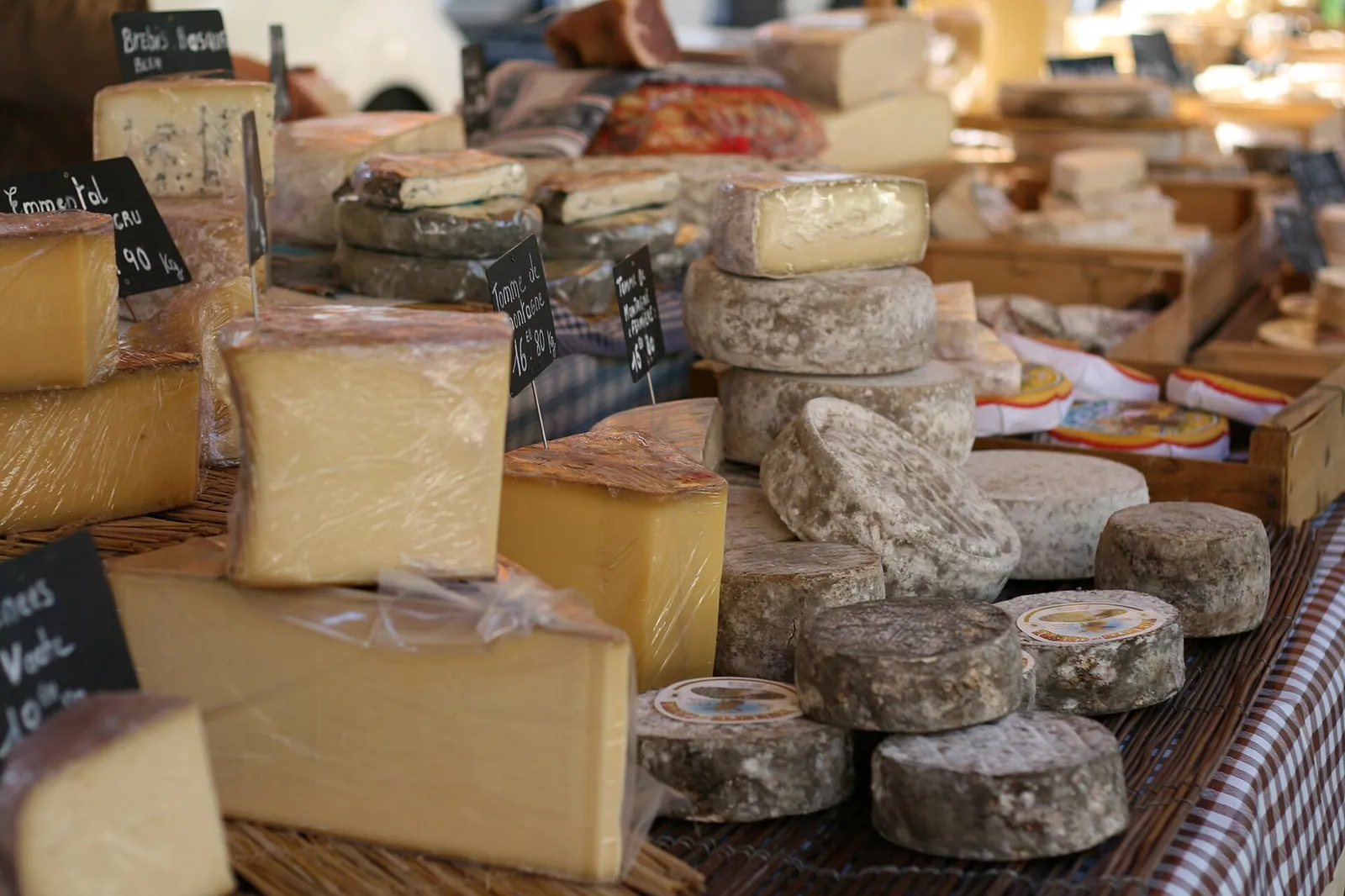
It all begins at the market. Before even thinking about a restaurant, we always suggest taking the pulse of the region on its stalls. Each village has its day, and each market its character. In Gordes, it's Tuesday morning on the Place du Château; in L'Isle-sur-la-Sorgue, Sunday turns the town into a maze of antique dealers and producers; in Apt, Saturday draws one of the largest markets in Provence. You'll find tapenades, fresh goat's cheeses, dried herbs, fougasses and heirloom tomatoes. To plan your mornings without missing a thing, we lay out day by day the most beautiful Provençal markets of the Luberon, with our tips for arriving early and leaving with a full basket.
Where to eat: from village bistros to Michelin-starred tables
The Luberon packs in a rare density of fine dining. Around Gordes, you can dine at Michelin-starred chefs' tables without ever driving more than a quarter of an hour. But the pleasure also lives in family-run inns, terraces shaded by plane trees and the wine bistros of the hilltop villages.
To help you choose between a grand gastronomic celebration and a relaxed lunch, we've gathered our favourite addresses in a dedicated guide to the Michelin-starred restaurants and best tables of the Luberon. It covers both the exceptional houses and the little spots we return to season after season, fork in hand and elbow on the chequered tablecloth.
Wine: two appellations, endless nuances
It's hard to talk about food without raising a glass. The territory is shared between two great appellations: AOC Luberon, to the south, and AOC Ventoux, at the foot of the Giant of Provence. Supple reds, fresh and taut whites, thirst-quenching rosés: the diversity of the terroirs and the altitude produce wines that are both approachable and capable of lovely surprises.
- The rosés, perfect for long summer gatherings by the pool.
- The Ventoux whites, lively and mineral, ideal with a fresh goat's cheese.
- The Luberon reds, fruit-forward, that pair beautifully with a daube or autumn game.
To understand what sets these two territories apart and choose your bottles like a connoisseur, we've written a complete guide to the AOC Luberon and Ventoux wines. And because nothing beats meeting a winemaker, we always recommend a morning of cellar visits: our wineries to visit around Gordes are nearly all within easy reach, set among the vines and olive trees.
Local produce, to taste and to take home
Beyond restaurants and cellars, the Luberon is a land of produce in its own right. Three treasures, in particular, are worth pausing over.
The truffle, candied fruits, melon
The black truffle of Ventoux (Tuber melanosporum) is harvested in winter, and the Carpentras markets, on Friday mornings, are its epicentre. In Apt, candied fruits carry on a craft that's centuries old, while the Cavaillon melon embodies, from summer onwards, the very essence of Provençal sweetness. We tell the story of these three emblems, their seasonality and our tasting tips in an article devoted to the specialties of Provence: truffle, candied fruits, melon.
Olive oil, the green gold of Provence
Finally, it's impossible to leave the region without a bottle of olive oil in your luggage. The mills nearby, around Maussane-les-Alpilles or even closer in the Luberon, gladly open their doors for a tasting. There you learn to tell green fruity oil from ripe fruity oil, and to recognise the peppery kick on the palate, that slight tingle that signals a quality oil. To plan your tour, follow our guide to Provence olive oil: mills and tastings.
Eating in step with the seasons
One last insider tip: in the Luberon, you eat by the calendar. Asparagus and strawberries open the spring; summer belongs to melon, tomatoes and apricots; autumn gives pride of place to grapes, figs and the first game; and winter, at last, is the prime season for the black truffle. Cooking what is growing while you're staying is the best way to understand the Provençal table.
Make Le Clos de Manon your food lover's base camp
A ten-minute walk from Gordes, our villa with its private heated pool is the ideal starting point for moving from a market to a cellar, from a mill to a Michelin-starred table. Many of our guests love coming back late in the morning with a loaded basket, lunching on the shaded terrace, then heading out in the evening for an exceptional dinner. To enjoy this gourmet interlude in the heart of the Luberon, simply check our availability and choose your dates: Provence, and all its terroir, awaits right at your door.