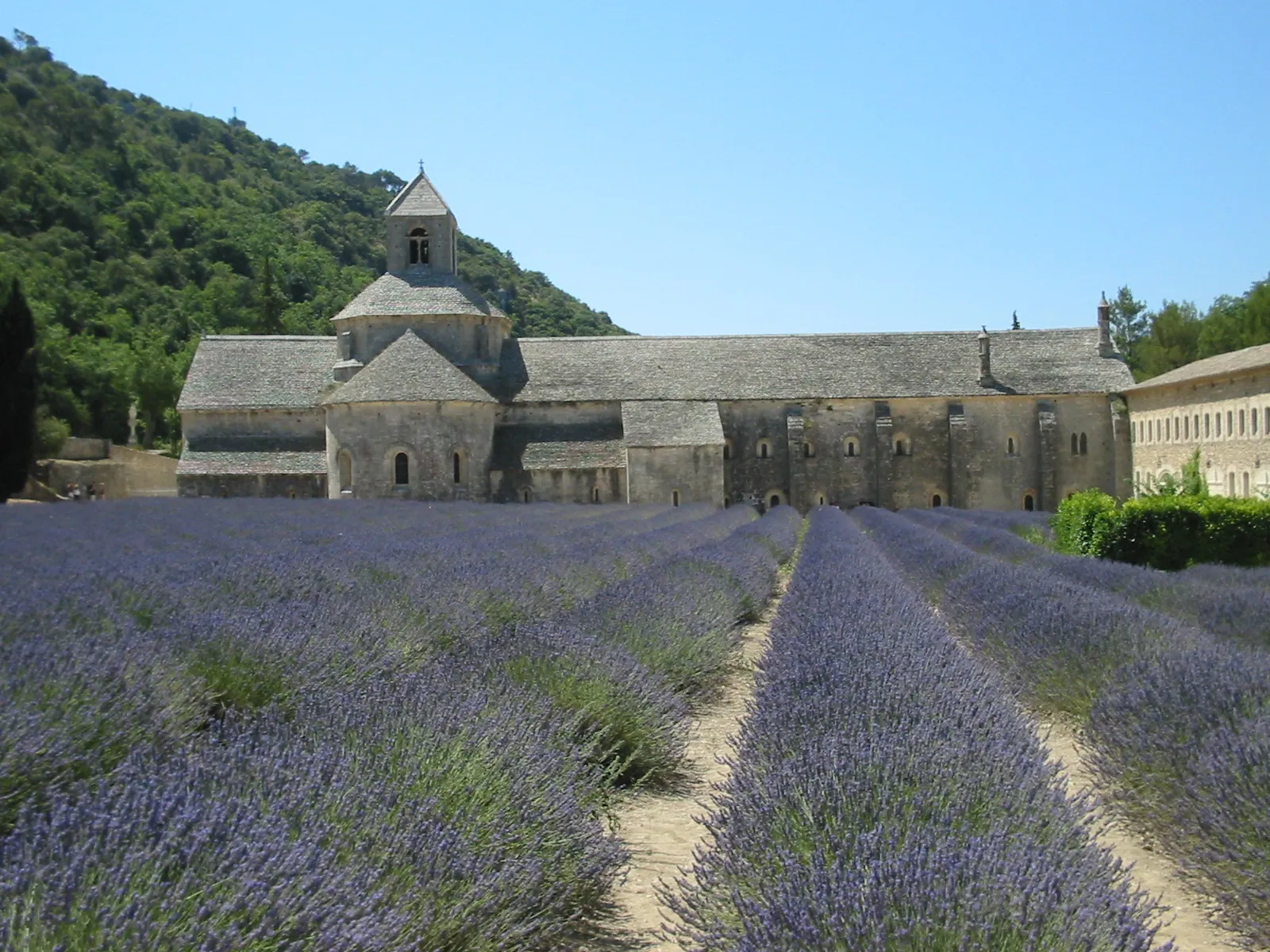
"When should we come?" It's the question our guests ask us most often before booking Le Clos de Manon. And the truth is that there's no bad season in the Luberon: there are only different Provences. The light of May has nothing in common with that of September, and the silence of a January morning at the foot of Gordes is every bit as precious as the scent of a lavender field in July. Here is our insider's guide, season by season, to help you choose the time of year that truly matches what you're after.
Spring: Provence awakening
From April to June, the Luberon shakes off its winter slumber, and it's quite possibly our favourite season. The almond trees blossomed back in February, the cherry trees in the valley take over, and poppies line the edges of the paths. Temperatures are mild, often between 15 and 25°C during the day, perfect for walking the trails of the regional nature park without suffering in the heat.
It's also low season for tourism: you can park easily on the Place du Château in Gordes, the café terraces are quiet, and you have hilltop villages like Roussillon or Ménerbes almost to yourself. The flip side comes down to a single word: the lavender isn't in bloom yet. The fields around Sénanque Abbey, 4 km from the villa, stay green until mid-June. If you dream of hiking, peaceful markets and gentler rates, this is the ideal moment — we cover it all in our article on the Luberon in spring: what to do in April to June.
Summer: the reigning season of lavender
July and August are the Provence of postcards: purple fields, cicadas, long balmy evenings and bustling markets. It's also the only time of year when you can truly see the lavender in bloom. In the Luberon, the bloom peaks between late June and mid-July; on the higher plateaus such as Sault or Valensole, it comes later, lasting until the end of July or even early August.
If lavender is your reason for coming, start with our guide to the lavender routes of Provence to plan your stops, then our guide to the Valensole plateau and its sea of lavender, the most spectacular day trip of all (allow about 1 hour 15 by road from Gordes). To understand how the flower is turned into essential oil, nothing beats a visit to a lavender distillery near Gordes, often open to the public at harvest time.
- Heat: afternoons regularly climb above 32°C, sometimes reaching 38°C at the peak. That's precisely why we heat the pool at the villa: you cool off during the hottest hours, then enjoy the garden once it's fresher.
- Crowds: Gordes, Roussillon and Sénanque are packed between 11am and 4pm. The secret is to plan your outings early in the morning or late in the day.
- Markets: they're in full swing. The Tuesday morning market on the Place du Château in Gordes is one of the finest in the Luberon.
To make the most of a summer stay without enduring the crowds or the heatwave, we've gathered our tips in the Luberon in summer: lavender, markets and keeping cool. One simple piece of advice: book early. Dates between 25 June and 20 August often go six to nine months ahead.
Autumn: harvests, colours and a gentler pace
From September to November, the Luberon may well offer its best balance of quality and tranquillity. September keeps the warmth of summer — the pool water stays pleasant, the terraces are still open — but the crowds have moved on. It's the season of the grape harvest in the Ventoux and Luberon AOC estates, of the first chestnuts, and of a golden light that delights photographers.
In October, the vines and oak forests turn spectacular shades of copper, especially around Roussillon, where the ochre of the cliffs plays off the red of the foliage. The markets shift towards seasonal produce: mushrooms, squash, fresh olives. To plan these generous weeks, browse our guide to the Luberon in autumn: harvests and colours. Just note that the lavender was cut long ago: if it's your goal, save your visit for summer.
Winter: the secret Luberon
From December to March, Provence empties out and reveals itself to those in the know. The hilltop villages recover their silence, the cafés grow intimate, and the winter light — low, crisp, washed clean by the mistral — has a purity you'd never suspect in high season. The days can be surprisingly sunny: it's not unusual to lunch outdoors at noon in the middle of January, even if the nights drop close to 0°C.
This is the season of the mistral, the north wind that blows for several days at a stretch, sweeps the clouds away and gives skies of an absolute blue. Well wrapped up, you walk through a clear, deserted landscape; it's also the time of the Vaucluse truffles and their dedicated markets. We tell the story of this hidden Provence in the Luberon in winter: mistral, calm and light. At the villa, the heated house and the wood stove make it the perfect refuge for a cosy off-season stay.
The lavender calendar, at a glance
Because it's the first thing our guests think about, here are the key milestones — bearing in mind that the dates shift by a week or two depending on how harsh the winter has been:
- Late May – early June: stems are up but the fields are still green. No flowers.
- Mid-June: first blooms visible at Sénanque Abbey, in the Luberon.
- Late June – mid-July: peak bloom in the Luberon. The best window.
- Mid-July – early August: peak on the higher plateaus (Sault, Valensole).
- Late July – August: the harvest begins; some fields are already cut.
The mistral and the weather, month by month
The Luberon's climate is typically Mediterranean: hot, dry summers and mild but windy winters. The mistral can blow in any season, most often in spring and winter. Far from being a drawback, it chases away the clouds and clears the air; it's what gives Provence its famously luminous skies. The rain comes in short bursts, especially in autumn, sometimes intense but rarely lasting. In practice:
- Spring: mild, 15–25°C, a few bouts of mistral, vegetation at its most vivid.
- Summer: hot to very hot, 28–38°C, dry, with long, balmy evenings.
- Autumn: mild, 18–26°C in September, golden light, a little rain in October and November.
- Winter: cool and bright, 5–14°C by day, frequent mistral, skies of a deep blue.
So, which season should you choose?
If you're coming for the lavender, it has to be July, no question. For hiking and quiet villages, choose April–May or September–October. For swimming and that summer atmosphere, July–August — booking well in advance. And to recharge in an intimate, luminous Provence, be bold and try winter. Whatever the season, Le Clos de Manon awaits you a ten-minute walk from Gordes, with its heated pool and walled garden. We open the calendar for the following season as early as autumn: to lock in your ideal dates, the simplest thing is to check our availability online and to write to us if you have the slightest question. We'd be delighted to recommend the season made for you.