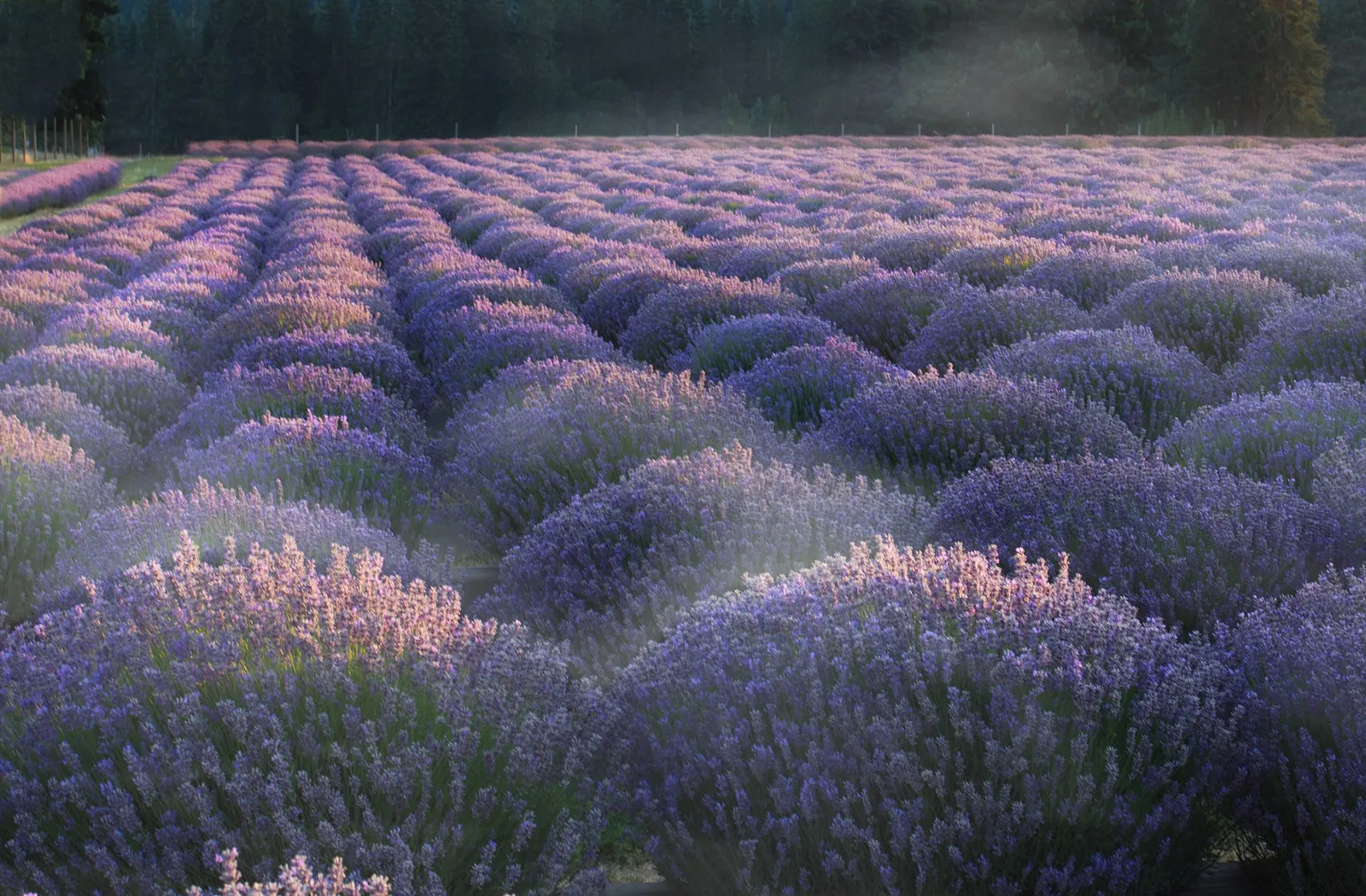
Watching a field of lavender ripple in the July sun is one thing; understanding how those stems become a vial of essential oil is quite another, and it is often what stays with our guests the most. Every summer, once the harvest is in, the distilleries of Provence start to turn and the air fills with a warm, almost heady fragrance. To step through the door of one of them is to go behind the scenes of what the old-timers here call blue gold. Here is our host's notebook for visiting a distillery from Gordes, understanding what you smell and what you buy, and coming home with a bottle that is truly worth the trip.
Fine lavender or lavandin: the first thing to know
Before we even talk about distillation, you need to know what is being distilled, because everything follows from it. Two plants grow side by side in Provence, and they are almost always confused.
- Fine lavender (or true lavender, Lavandula angustifolia) grows at altitude, above 600 to 800 metres, in irregular clumps. It is rare, fragile, and yields a delicate essential oil prized in perfumery and aromatherapy. This is the one that carries the Huile essentielle de lavande de Haute-Provence AOP.
- Lavandin (Lavandula x intermedia) is a natural hybrid, grown in the plains in long, even rows. It is the one most often photographed, generous and spectacular. Its oil, more camphorous and far more abundant, scents soaps, laundry products and household cleaners.
Neither one is "better": they simply do not serve the same purpose. But this distinction explains the considerable price difference between two seemingly identical bottles. An honest distiller will always tell you so, and that is precisely the value of a visit over a purchase in a souvenir shop.
How a distillery works
The principle has remained almost unchanged for centuries: it is steam distillation, or steam entrainment. The process is easy to grasp, and fascinating to watch in action.
- The still is loaded. Freshly cut lavender (or sometimes lightly dried) is packed into a large metal vat, by the hundreds of kilos.
- Steam passes through the plant. Water vapour is injected from below; as it rises, it releases the tiny pockets of essence held within the flowers.
- It is condensed. This oil-laden steam passes through a cooled coil, where it returns to liquid.
- It is separated. In the separator, the essential oil, being lighter, floats above the water. It is collected from the surface; the scented water that remains is the hydrosol (or floral water), a gentle product used on the skin or in cooking.
The figure that astonishes everyone: it takes around 120 to 150 kg of fine lavender to obtain a single litre of essential oil. As you leave, you understand far better why a small, genuine bottle costs what it does.
When to come: the rhythm of the harvest
A distillery does not run all year round. To see the stills in action, and not just a museum, you need to aim for the harvest window, which follows the flowering by a few weeks.
- Mid-July to late August: this is the peak season for cutting and distillation. The plains are harvested first, then the high plateaus such as Sault extend the activity into August.
- Out of season: many distilleries stay open for their shop and offer an educational tour, but without the spectacle of steaming vats or the scent that saturates the air.
Our insider tip: if you are set on seeing the distilling, call the day before to confirm that the cutting has indeed begun, as a hotter year can bring everything forward by ten days. To plan your stay around the right window, we set out the region's rhythms in our guide to the seasons in Provence. Lavender is very much part of a certain idea of summer here, as we describe in our notebook on the Luberon in summer: lavender, markets and cool retreats.
Where to visit a distillery from Gordes
From Le Clos de Manon, two directions open up to you, complementary depending on whether you prefer something close by or a wider horizon.
Close by: Coustellet and the valley
About fifteen minutes from Gordes, the Coustellet area is home to a lavender museum that traces the history of the stills and helps you understand the whole process, ideal with children or in the heat of a heatwave. It is an easy stop, on the road between the villages, that lays the groundwork before going to see a real distillation.
Further afield: the Sault plateau, kingdom of fine lavender
About an hour's drive away, at the foot of Mont Ventoux, the Sault plateau is the historic home of high-altitude fine lavender. It is here that you find the most authentic distilleries, often family-run, and the best addresses for taking home an oil with the appellation. Sault flowers and is harvested later than the plains, which makes it an excellent excursion for late July or early August. It is also a wilder landscape, threaded with golden wheat, that we are especially fond of.
Recognising and buying a genuine essential oil
This is the whole point of a visit: coming home with an authentic product rather than a diluted bottle from a tourist shop. A few simple instincts will spare you any disappointment.
- Read the label. Look for the Latin name (Lavandula angustifolia for fine lavender), the wording 100% pure and natural, the origin, and ideally the AOP mention for Haute-Provence fine lavender.
- Be wary of prices that are too low. Given the plant's yield, a truly genuine fine-lavender oil cannot be cheap. A suspiciously low price often signals lavandin being sold as lavender.
- Smell, and ask. At a distillery, they will gladly let you breathe in the difference between fine lavender and lavandin. Make the most of it: it is free and instructive.
- Consider the hydrosol. Gentler and more affordable, it makes a lovely souvenir to bring back, perfect as a refreshing mist in summer.
Beyond the bottle, soap, lavender honey and sachets of dried flowers make excellent gifts that will carry the scent of your holiday long after you return. And if you come later in the year, know that the region is worth visiting in every season: the Luberon in autumn, between grape harvest and colours, offers other pleasures that are just as Provençal.
Your ideal base for following the blue gold
The great luck of staying at Le Clos de Manon is being able to set out in the morning along the lavender roads, push open the door of a distillery in full swing, then come back to swim in the heated pool a ten-minute walk from Gordes, the bottle still warm in your basket. This rhythm, that of a true Provençal home in the heart of the Luberon, turns a simple visit into a lasting memory. If you dream of a fragrant July as close as possible to the fields and the stills, check our availability and book your stay before the best harvest weeks are taken.