There is a gesture we repeat every morning, almost without thinking: pouring a thread of olive oil over a slice of toast and instantly catching the scent of cut grass, raw artichoke, sometimes that little tingle at the back of the throat that marks out the finest oils. In Provence, olive oil is not a condiment, it is a language in its own right, spoken since antiquity at the foot of every hilltop village. For our guests, it is also the perfect edible souvenir: a bottle slipped into the suitcase keeps the holiday alive for months. You just need to know where to buy it, how to choose it and, above all, how to taste it. Here is what we share with everyone who passes through Le Clos de Manon.
A thousand-year story at the foot of the Luberon
The olive tree has been part of Provence since antiquity, planted by the Greeks and then cultivated tirelessly along the Rhône and across the limestone hillsides. The great frost of February 1956, which wiped out a considerable share of the olive groves, is still etched in local memory: it redrew the landscape and pushed growers to replant with patience. Today the olive tree still shapes our restanques, those dry-stone terraces that hold the soil on the slopes. Around Gordes you come across centuries-old trees with gnarled trunks, silver-grey under the mistral.
This heritage is part of a far wider culinary terroir, which we explore in detail in our gourmet guide to the Luberon. Olive oil is perhaps its oldest common thread, the one that links today's cooking to the gestures of the first farmers.
Understanding the PDO labels: a promise of terroir
France protects several olive oils with a PDO (Protected Designation of Origin), which guarantees the geographical origin, the authorised varieties and the know-how. Two of them are of direct interest to our guests in Provence:
- The PDO Huile d'olive de la Vallée des Baux-de-Provence, in the heart of the Alpilles, about an hour from Gordes: often intense oils with a marked pungency, sometimes made the old-fashioned way (olives matured before pressing) for a rounder, more confit profile.
- The PDO Huile d'olive de Provence, broader in scope, covering much of the region, including the Vaucluse and therefore the area around the Luberon.
Further east there is also the PDO Huile d'olive de Haute-Provence, built around the aglandau variety. These designations are far more than a marketing label: they guarantee a French oil that is traceable and cold-pressed. Unlike the anonymous supermarket blends, this is exactly what we look for when we want to give or bring home a true product of the land.
The olive varieties that give Provence its flavour
An oil is first of all one (or several) olive variety, what growers call an olive cultivar. A few names come up again and again on our market stalls and at our millers':
- The aglandau (also called verdale or béruguette), queen of the Vaucluse: pungent and herbaceous, with a fine bitterness and that frank kick that wakes up a salad or a soup.
- The salonenque and the grossane, emblematic of Les Baux, softer and fruitier, ideal for beginners.
- The tanche, the famous black olive of Nyons (a little further north), supple and round on the palate.
- The picholine and the bouteillan, found in many Provençal blends.
There are also three broad profiles depending on ripeness and process: green fruity (olives picked early, pungent and vegetal), ripe fruity (softer, on confit fruit) and black fruity, or "old-fashioned", with a flavour of tapenade and undergrowth that is quintessentially Provençal.
Visiting an olive oil mill: the right time, the right moves
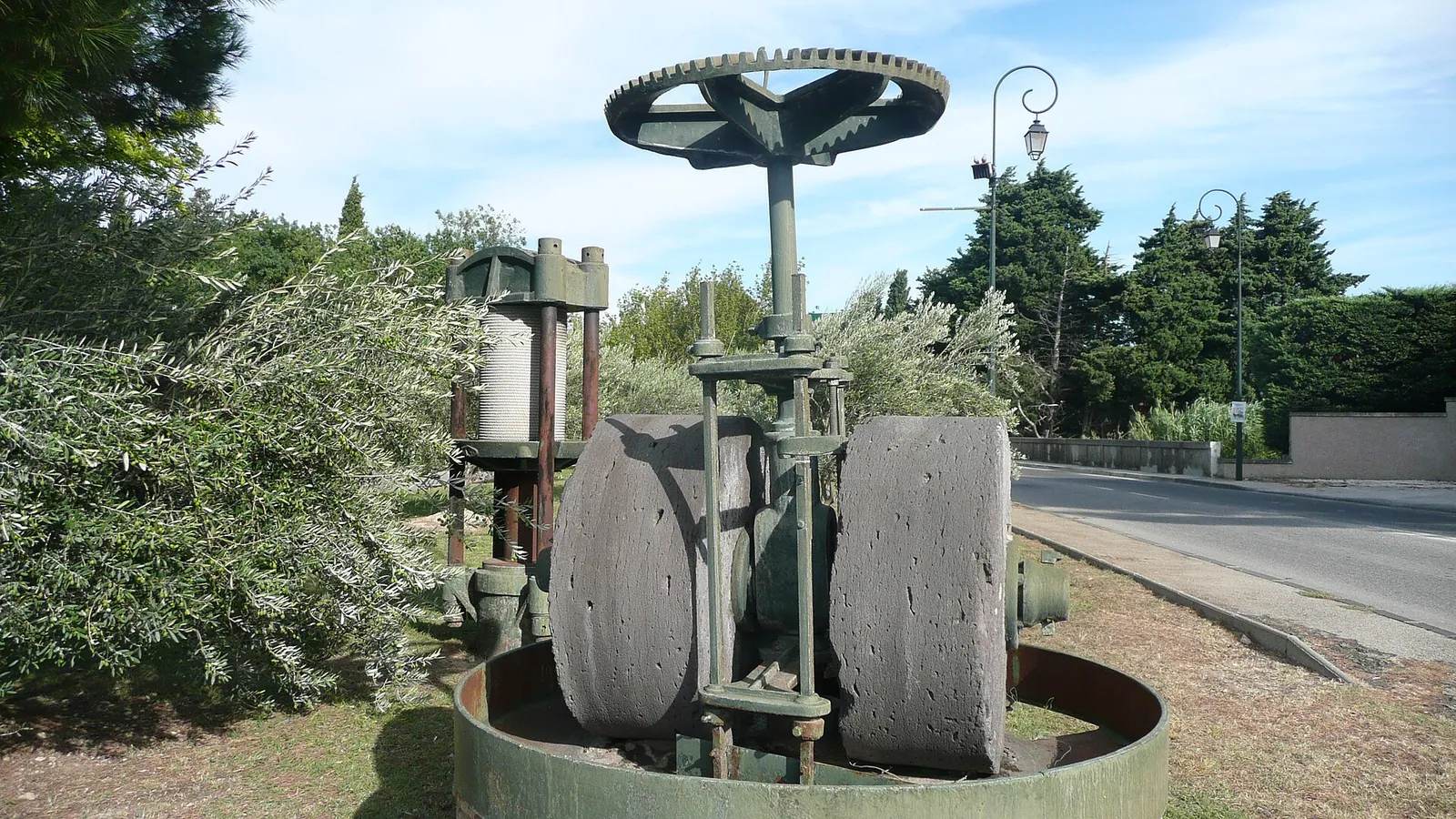
Nothing beats a visit to the mill, where the olives are crushed, blended and pressed. The harvest and pressing take place in autumn and early winter, roughly from mid-November to January depending on the year and the varieties. This is the high season: watching the millstones turn and tasting the new oil, still cloudy and peppery, is an experience that stays with you. This buzz is one of the pleasures we highlight in the Luberon in autumn.
The rest of the year, many mills keep a shop open and offer tastings and explanations. Around Gordes, several addresses are reachable in under half an hour: the cooperative mill in the Apt area, the mills around Cabrières-d'Avignon and Coustellet, or, for a half-day excursion, the Alpilles estates classified under the PDO Vallée des Baux. Our advice: call ahead before setting off outside the harvest season, as opening hours vary, and aim for late morning to make the most of the light over the olive groves.
Market or mill: where to buy?
The two complement each other. The mill offers traceability, contact with the producer and often a side-by-side tasting of several fruity styles. The market, for its part, lets you taste several oils alongside one another and fill your basket with other treasures; we cover them in our round-up of the most beautiful Provençal markets in the Luberon. In both cases, be wary of prices that are too low: a genuine cold-pressed PDO oil comes at a price that reflects a whole year's work.
How to taste (and choose) an olive oil
Tasting an oil is something you learn, and it is more fun than you might think. Here is the method our millers passed on to us:
- Warm a little oil in the hollow of your hand or in a small glass, palm placed over the top, to release the aromas.
- Smell it: cut grass, artichoke, tomato, almond and green apple are signs of a living, fresh oil.
- Taste while drawing in a little air (the famous "strippaggio") to spread the oil across the palate.
- Notice the bitterness and pungency, that tingle at the back of the throat: far from being a fault, they signal polyphenols, marks of quality and freshness.
- Steer clear of rancidity: a smell of old cardboard, oxidised nut or tired fat betrays an oil past its best.
To keep your bottle, store it away from light and heat, tightly closed, and ideally use it within the year: olive oil is not wine, it does not improve with age. And match your fruity styles: a pungent green oil on a salad or grilled fish, a ripe or black one on a purée, a soup or a morning slice of bread.
A liquid terroir to savour at Le Clos de Manon
Olive oil is the thread that ties the whole Provençal table together: it flavours tapenade, binds the aïoli, coats market vegetables and accompanies our local wines. To round off a gourmet day, we like to suggest that our guests pair their freshly bought bottle with a good one, browsing our guide to the AOC Luberon and Ventoux wines, or to prolong the pleasure at the table thanks to our pick of starred restaurants and fine tables in the Luberon.
A ten-minute walk from Gordes, a quarter of an hour from the valley's mills and half an hour from Apt, our villa with a private heated pool is the perfect base camp for roaming from olive grove to mill. Our guests often come back in late morning, the bottle still warm in the basket, to uncork it at noon on the terrace, in the shade, before a swim. To live this interlude and bring home the true taste of the South, simply check our availability and pick your dates.