When our guests ask us what they absolutely must taste during their stay, we never start with the restaurants. We talk about the produce. Because before it is a matter of chefs, Provence is a matter of terroir: a truffle dug up on a winter morning, a melon cut in two that fills the whole kitchen with its scent, a piece of candied fruit gleaming like a precious stone. From Gordes, where we welcome our guests, all these treasures are within easy reach of a basket, often less than thirty minutes' drive away. Here are the Provençal specialties we love to share, when they are in season, and above all where to track them down as close to the producer as possible.
The black truffle, the diamond of the Provençal winter
Let's start with the most secretive and the most coveted: the black truffle, the famous Tuber melanosporum, also known as the rabasse in Provençal. It is harvested from mid-November to mid-March, when the truffle oaks lie dormant and the dogs — pig-led truffle hunting has all but disappeared — sniff out the mushroom buried beneath the red earth.
The epicentre is not the Luberon as such, but Carpentras, about forty minutes from Gordes. Every Friday morning from November to March, the truffle market is held there around the town hall square: a wholesale market early in the morning, reserved for brokers, then a few stalls open to the public. It is as much a spectacle as a market — people whisper, weigh, and smell. A few tips we always pass on:
- Buy by weight and trust the aroma: a good truffle is firm, heavy, and smells intensely without needing to be scratched.
- Eat it within the next few days: the truffle loses its aroma quickly. Kept in a jar with eggs, it perfumes them beautifully.
- Be wary of the summer truffle (Tuber aestivum), milder and far cheaper: it's a lovely product, but it is not the same thing.
The Apt area and Mont Ventoux are also home to a few estates that offer truffle-hunting demonstrations and tastings at the farm: a perfect morning to understand this mysterious product before cooking it yourself, simply, on a soft scramble of eggs or fresh pasta.
Apt, world capital of candied fruit
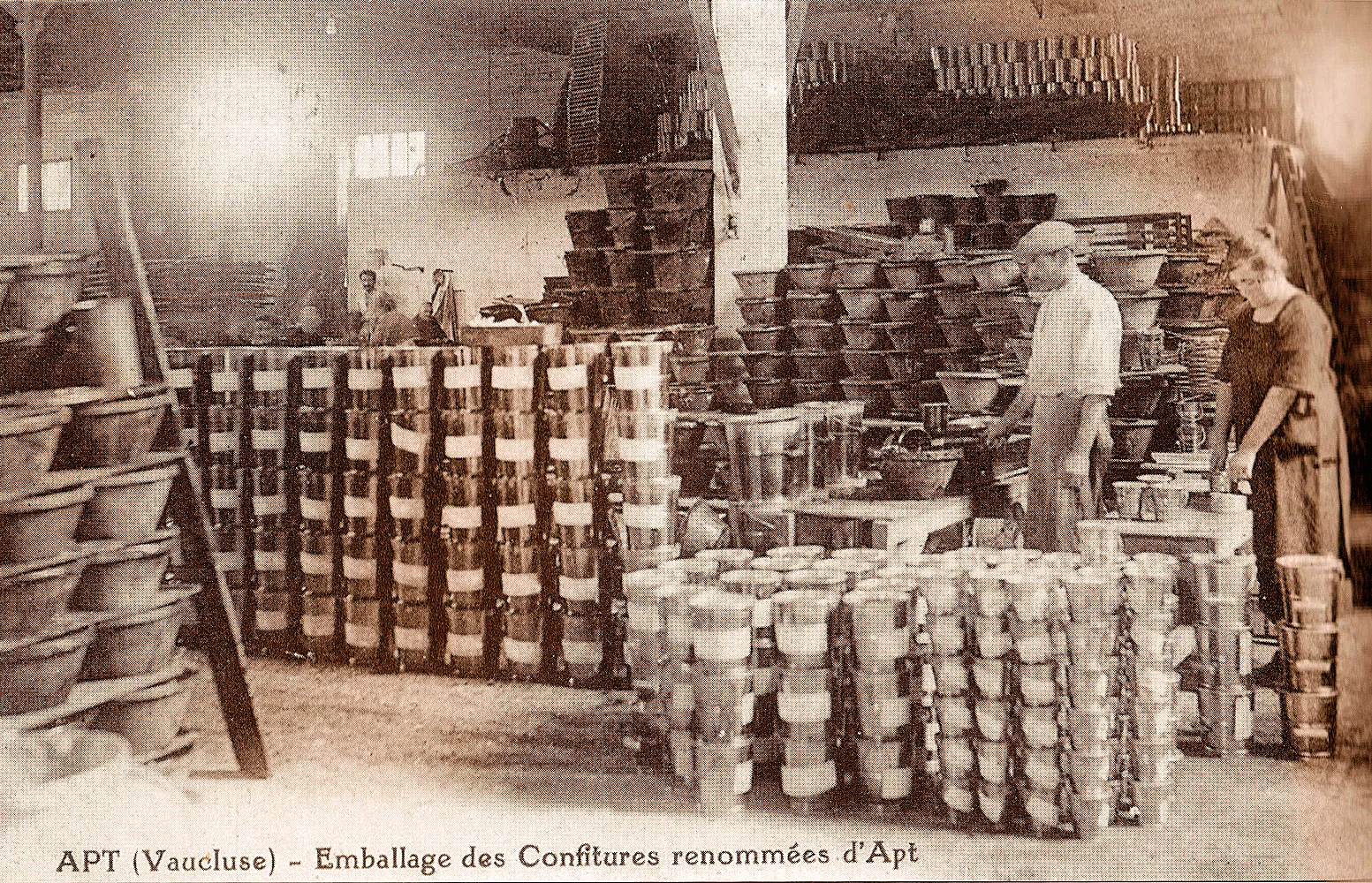
About twenty minutes from Gordes, Apt holds a title few towns can claim: world capital of candied fruit. A craft that dates back to the Middle Ages, when the confectioners of the Avignon papacy perfected the art of preserving fruit in sugar. Five centuries later, the tradition is still very much alive.
The process is patient: the water in the fruit is slowly replaced with sugar syrup, bath after bath, until you obtain a translucent fruit that keeps its shape and flavour. Cherries, apricots, melon, angelica, clementines, pears: nothing is left out. It is also in Apt that the fruit is born which, elsewhere in Provence, goes into the calissons of Aix and certain nougats. On site, several historic confectioners welcome visitors and sell from their workshops: you buy by weight, you taste, and you leave with something to crown a dessert or fill a festive basket. To take in Apt beyond its confectionery, slip into its big Saturday market, one of the liveliest in Provence, which we describe in the most beautiful Provençal markets of the Luberon.
The Cavaillon melon, summer in a sphere
From the month of June, a sweet fragrance settles over the stalls: the Cavaillon melon is back. The town, about twenty minutes south-west of Gordes, is so tied to this fruit that Alexandre Dumas, a great enthusiast, traded twelve melons a year during his lifetime in return for sending his works to the municipal library. The Cavaillon melon is a charentais melon, with orange flesh, juicy and intensely fragrant, grown on the Durance plain where the sun and irrigation water work wonders.
How do you choose a good one? We always repeat the same checks to our guests: a ripe melon feels heavy in the hand, its stalk begins to crack, and it gives off a clear fragrance at the end opposite the stalk. The peak season runs from June to September; at the height of summer, at the Cavaillon and Coustellet markets, you buy it straight from the grower, still warm from the field. Served well chilled, lightly salted or with a slice of cured ham, it is surely the simplest and most lasting memory of a summer stay in Provence.
Nougat, lavender honey and tapenade: the companions of the terroir
Around these three emblems orbit a host of small marvels we love to share. Nougat, soft or hard, brings together honey, almonds and egg whites; you'll find it at every good market and it is one of the thirteen Provençal Christmas desserts. Lavender honey, gathered on the plateaus of the Luberon and Sault, is one of the finest there is — clear, creamy, with an inimitable floral sweetness.
- Tapenade, that purée of olives, capers and anchovies, to spread at the aperitif or to tuck inside a fish.
- Ventoux goat's cheese, fresh or ash-coated, sublime drizzled with a thread of oil and a turn of the pepper mill.
- Local almonds and dried apricots, perfect for long walks along the garrigue trails.
Many of these products are born of the same farming gesture as olive oil: if you love bold flavours and meeting the producers, continue the discovery with our article on Provence olive oil: mills and tastings, where you learn to recognise a fine fruitiness and choose your bottle like a connoisseur.
Where to buy, and when: our insider's calendar
The secret of a good Provençal basket comes down to two things: the season and proximity. You buy truffles in winter at Carpentras, candied fruit all year round at Apt, melon from June to September at Cavaillon, honey and nougat at the village markets. The cooperatives and farmers' markets of Coustellet, Apt or Cavaillon often offer the best balance of price, freshness and a direct link to the producer. To build your mornings without missing a thing, this overview fits naturally into our gourmet guide to the Luberon, which connects markets, cellars, mills and good tables.
And when it's time to sit down to eat rather than to cook, these same products reappear, transformed, on the plates of the region's chefs: we cover them in our selection of starred restaurants and good tables of the Luberon.
Build your Provençal basket from the Clos de Manon
A ten-minute walk from Gordes, our villa with a private heated pool is the ideal base camp for roaming from a market to a confectioner, from a truffle grower to a vegetable farmer. Many of our guests love to come back late in the morning with their basket overflowing, lunch on the terrace in the shade, then cook the fruits of their finds in the evening, glass of rosé in hand. To live this interlude of flavours in the heart of the Luberon, simply check our availability and pick your dates: Provence and all its terroir await right on your doorstep.