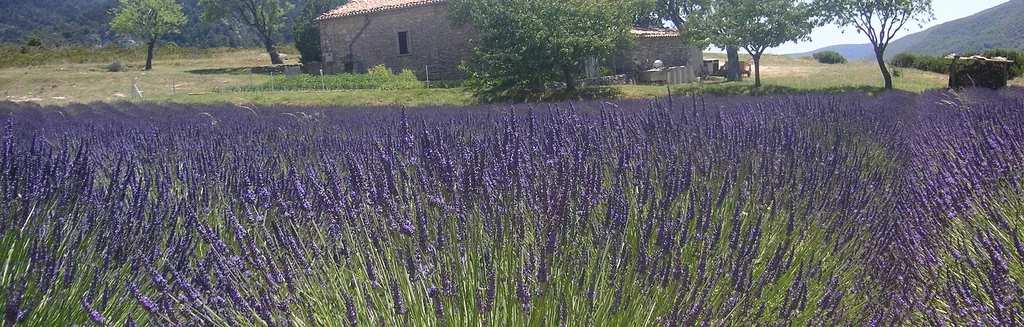
“What’s the weather like at your place?” It’s probably the question our guests ask us most often before they book. And it’s an excellent one, because the Luberon doesn’t show the same face in February, under a low raking light and a mistral that scours the sky, as it does in July, when the lavender sets the plateaus ablaze and the cicadas never fall silent. Choosing your month is already choosing the mood of your stay: crowds or quiet, swimming or a crackling fire, vines in bud or fragrant harvests.
From Le Clos de Manon, a ten-minute walk from Gordes, we watch this climate all year round. We know when the heated pool makes all the difference, when you’ll want a sweater for an aperitif on the terrace, and when the heat calls for a nap in the shade of the plane trees. So here, month by month and season by season, is the real Luberon weather: figures, lived experience, practical tips and a summary table to help you decide at a glance on the best time for you.
The Luberon’s Mediterranean climate in brief
The Luberon enjoys a true Mediterranean climate, marked by hot, dry summers, mild, luminous winters and, above all, exceptional sunshine: here we count between 2,700 and 2,800 hours of sun a year, nearly 300 days when the sun shows itself, compared with a national average of around 1,900 hours. It is one of the region’s greatest assets, and the reason the painters of light, from Cézanne to the Impressionists, never left Provence.
Rainfall, contrary to popular belief, isn’t low over the year (around 700 mm), but it is very concentrated: it rarely rains, yet often heavily, especially during the autumn storm episodes. Summer, by contrast, can stay dry for weeks. To follow up-to-date forecasts before and during your stay, we always recommend our guests check the official Météo-France website, which covers the Vaucluse in fine detail.
One last key element of the local climate: altitude and relief. Gordes sits at around 370 metres, the hilltop villages range from 200 to 500 metres, and the Luberon massif rises above 1,100 metres at the Mourre Nègre. As a result, nights are often cool, even in summer, and the difference in temperature between shade and full sun is striking. That’s also what makes the climate so bearable: you can have 32 °C in the afternoon and sleep with the window open under a light duvet.
Winter (December to February): mild, luminous, calm
A Provençal winter is nothing like a winter in Paris or Lyon. The days are short but often radiant: it’s not unusual to lunch outdoors in the midday sun in January, well wrapped up, while the rest of France shivers under the grey. Sunny afternoons readily read 8 to 12 °C, sometimes more. Nights, on the other hand, frequently drop below freezing, especially under clear skies and the mistral.
This is the season of silence: the hilltop villages return to their locals, the lanes of Gordes lie empty, and you feel as though you’re rediscovering the authentic Luberon, the one from before the tourists. Black truffle reigns over the markets from November to March, fireplaces crackle, and accommodation rates are at their lowest. It’s exactly what we describe in our guide to the Luberon in winter.
- December: festive mood, Christmas markets in Aix and Avignon, the first truffles. 5 to 11 °C in the afternoon.
- January: the coldest month, but also among the most luminous. Ideal for hikers and lovers of quiet.
- February: the first almond trees already in blossom towards the end of the month, the first hint of spring.
Our hosts’ tip: this is the season when the heated pool truly comes into its own. A few lengths in water at 28 °C while the air is crisp and the sky a deep blue is an experience many of our guests never forget.
Spring (March to May): the reawakening
Spring is arguably our favourite season for discovering the Luberon. Nature bursts into life, the orchards cover themselves in blossom, the vines come into bud, and the light recovers its golden softness. Temperatures climb gradually, from 14–16 °C in March to 20–23 °C in May, with lengthening days and the scent of garrigue returning to the trails.
It’s also the time when the mistral shows itself most, particularly in March and April. It can blow hard for several days running, chilling the air but offering in exchange a sky of absolute transparency. Photographers know it well: the Luberon is at its most beautiful in the wake of the mistral.
- March: almond trees and the first blossoms, nature waking up, frequent mistral. Still quiet in terms of crowds.
- April: poppies in the fields, green vines, pleasant temperatures. The terraces reopen.
- May: the ideal month for many. Gentle warmth, long days, wisteria in bloom, and crowds still reasonable outside the public holidays.
One word of caution, though, about the May holidays (1 and 8 May, Ascension, Whitsun): these bring the year’s first real crowds, with busier roads and sites such as Gordes or the Village des Bories heavily visited. To time your visit just right around the bloom and the colours, we cover everything in our article When to visit Provence? The seasons guide.
Summer (June to August): heat and lavender
Summer is the high season, and with good reason: this is the time of the lavender in bloom, of guaranteed sun and long, balmy evenings. Afternoon temperatures generally swing between 28 and 33 °C, with peaks that can exceed 36–38 °C during the heatwaves of July or August. The heat is dry, so more bearable than the humidity of the coast, but it sets a rhythm: you head out early in the morning and at the end of the day, and rest during the hottest hours.
The great spectacle is, of course, the lavender. The bloom peaks from mid-June to mid-July; the fields around Sénanque Abbey, a few minutes from Gordes, reach their height towards the end of June. The harvest starts in mid-July depending on the plots. To experience this season to the full, its markets and festivals, we point you to our complete guide to the Luberon in summer.
- June: our favourite. Lavender starting out, warmth still gentle, magical evenings, rising but manageable crowds.
- July: the sunniest month (≈ 350 h of sun) and the liveliest. Lavender at its peak early in the month, festivals everywhere.
- August: maximum heat and maximum crowds. Book well ahead. The lavender is largely harvested.
Our tip: in high summer, a house with a private pool isn’t a luxury, it’s a necessity. It’s what lets you come back to cool off between visits and turn scorching afternoons into moments of relaxation. You can also check our availability at Le Clos de Manon for the summer weeks, which always go first.
Autumn (September to November): harvests and mild days
Autumn is a well-kept secret. September keeps all the warmth of summer (often 25 to 28 °C in the afternoon) but with softer light, cooler evenings and crowds clearly thinning out as soon as the school year starts. It’s the season of the grape harvest, which scents the cellars throughout the Luberon, and one of the best times to combine fine weather with peace and quiet.
October offers sumptuous colours: the vines turn red and gold, the forests of the massif blaze, and the markets overflow with grapes, figs and squash. Temperatures stay pleasant (18 to 22 °C), even if the nights cool down sharply. November marks the true return to calm, with the first fires in the hearth and the start of the truffle season.
- September: arguably the best balance of the year. Indian summer, harvests, swimming still possible, crowds gone.
- October: blazing colours, mild days, ideal hiking. Risk of stormy rain episodes.
- November: calm restored, raking light, the first truffles. It’s the wettest month on average.
A point to watch: autumn, and especially late September and October, can bring Mediterranean episodes, those intense storms that pour down in a few hours the equivalent of several weeks of rain. They are spectacular but brief, and the sun returns quickly. Here too, keeping an eye on the forecasts and warnings on Météo-France is enough to plan your days with peace of mind.
The mistral, the wind that sweeps the sky clean
You can’t talk about the Luberon’s climate without mentioning the mistral, the north-westerly wind that rushes down the Rhône valley and sweeps across the whole of Provence. It can blow at 40 to 90 km/h, sometimes more in gusts, and bring the felt temperature down by several degrees. It often settles in for spells of three, six or nine days, according to the local saying.
Should you fear it? Not really. The mistral has two faces. On one hand, it can complicate meals on the terrace and give a deceptive feeling of chill in spring. On the other, it dries the air, chases away the clouds and brings light of unrivalled purity, the very light that made Provence famous among painters. It’s also what, in summer, makes the heat bearable and keeps the mosquitoes at bay.
Our practical tips for dealing with the mistral: always pack a light windbreaker, even in high summer, make the most of the sheltered corners of the garden for meals, and remember that it’s often the day after a burst of mistral that the landscapes are at their most photogenic. The Luberon Regional Nature Park also offers fine resources on the landscapes and trails to explore on these days of exceptional clarity.
Temperature and sunshine table
Here is a month-by-month summary of the averages observed in the Gordes area and the central Luberon. The temperatures shown are average highs and lows; sunshine is expressed in approximate monthly hours. These values are rough orders of magnitude to help you choose your time of year.
| Month | Max temp. | Min temp. | Sun (h) | Crowds |
|---|---|---|---|---|
| January | 10 °C | 2 °C | 150 | Very low |
| February | 12 °C | 2 °C | 170 | Very low |
| March | 16 °C | 5 °C | 220 | Low |
| April | 19 °C | 7 °C | 240 | Moderate (holidays) |
| May | 23 °C | 11 °C | 270 | Moderate |
| June | 28 °C | 15 °C | 320 | High |
| July | 31 °C | 18 °C | 350 | Very high |
| August | 31 °C | 17 °C | 320 | Very high |
| September | 26 °C | 14 °C | 250 | High to moderate |
| October | 20 °C | 10 °C | 190 | Moderate |
| November | 14 °C | 5 °C | 150 | Low |
| December | 11 °C | 3 °C | 140 | Very low |
A quick read of this table sums it all up: summer for guaranteed sun and lavender but with the crowds, spring and autumn for the best balance, winter for absolute calm and light. These differences in visitor numbers are also felt in the rates, a point we develop in our guide Holiday budget in the Luberon.
When to come to suit your plans
Rather than naming a single “best month”, which doesn’t exist, we prefer to start from what you’re after. Here’s how we advise our guests according to what they’re looking for:
- For the lavender: the last two weeks of June to mid-July, ideally late June to combine intense colour with crowds that are still reasonable.
- For swimming and warmth: from mid-June to mid-September, with a special mention for September, quieter and just as warm.
- For peace and lower prices: from November to March, outside the Christmas holidays. The Luberon is yours.
- For hiking and cycling: April–May and September–October, when temperatures are ideal for the effort.
- For the harvests and the food: September and October, with open cellars and gourmet markets.
- For the truffle: from mid-November to mid-March, at the heart of the Provençal winter.
Whatever your time of year, the key is to adapt your programme to the season rather than the other way round. A stay of five to seven nights lets you absorb the whims of the weather: a day of mistral or autumn rain then turns into a museum day, a tasting or some lazing by the fire. To build a complete, well-balanced programme, lean on our pillar piece, the practical guide to a stay in Gordes.
Your stay at Le Clos de Manon, in every season
If we so love welcoming our guests all year round, it’s because Le Clos de Manon was designed to make the weather an ally rather than a constraint. The private heated pool extends swimming from April to October and offers a magical interlude even in winter. The shaded areas of the garden protect you from the hottest hours of summer, and the Provençal calm, a ten-minute walk from Gordes, remains intact whatever the season.
Whether you dream of lavender fields in June, harvests in September or a Christmas by the fire with truffle on the table, we’ll know how to advise you on the best time and the finest day trips. Do write to us with your dates and your wishes, or check our availability at Le Clos de Manon right now: Provence awaits you, under the most generous sky in France.